
Illustrative artwork for education and context.
The Shirodhara tradition
Shirodhara is a traditional Ayurvedic practice in which a controlled stream of liquid, often warm oil, flows over the forehead while a person rests. Shiro refers to the head and dhara to a stream. The repeated, gentle sensation and quiet setting are central to its association with rest. It belongs to a broader tradition of individually chosen body practices rather than a stand-alone answer for every kind of stress.
The clinical setting
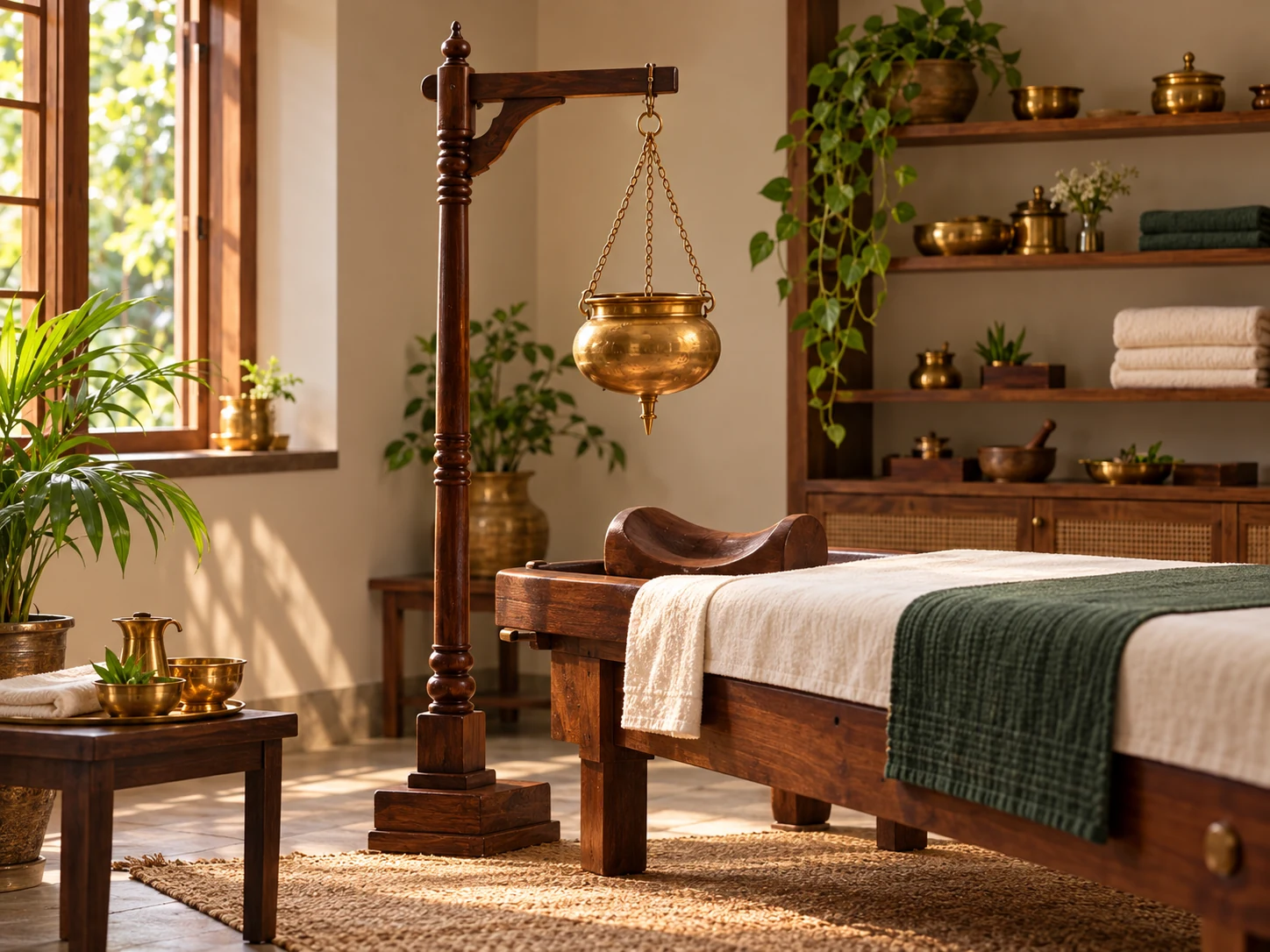
A thoughtfully prepared setting includes a comfortable table, a vessel or apparatus that controls the flow, suitable oil or another selected liquid, towels, and a way to maintain cleanliness and temperature. The equipment and setting matter as much as the visual ritual. The practitioner should explain the substance used, the length of the session, how it will be kept comfortable, and what happens if you want to stop.
Where it sits in Ayurveda
In some Ayurvedic traditions, Shirodhara is discussed alongside abhyanga (oil application or massage), rest, and other individually selected practices. It is not one of the five classical Panchakarma procedures by itself. Neither an oil treatment nor a spa-like setting automatically constitutes a complete Panchakarma program. Read the five-process guide for that distinction.
Rest and the experience of the practice
An Ayurvedic discussion of Shirodhara may ask about sleep, tension, daily pace, and the qualities of rest. The session is designed as a sustained period of stillness and sensory attention. Some small studies have examined mood, stress measures, and sleep after Shirodhara, but their results do not settle how reliably it helps a particular person. The value of a session should be discussed in terms of the experience, suitability, and the individual’s goals.
Questions about suitability
Before any body practice, mention skin or scalp sensitivity, oil allergies, injuries, balance or mobility concerns, pregnancy, current illness, and any medical advice that may affect positioning or temperature. Ask about hygiene, what touches your skin, who performs the service, and whether it is available. The appropriate choice may be to postpone, adapt, or avoid a procedure.
Shirodhara within a wider routine
Ayurveda also attends to food, sleep, movement, dinacharya, and emotional experience. A restorative body practice may be one element in that wider plan. The practitioner can discuss what supports steadiness between visits instead of presenting a single treatment as the whole solution. Personal circumstances, including work and relationships, shape what is practical.
Start with an individual discussion
Vaidya Kamal can explain the traditional rationale and help you ask informed questions about the actual services available at the practice. If a body therapy is considered, confirm its setting, personnel, preparation, risks, and cost directly. A consultation is a place to decide whether the idea fits your circumstances, not a guarantee that a procedure will be appropriate.
Further reading
The Directorate of AYUSH principles introduce the wider body–mind framework. A small study in healthy volunteers illustrates the early Shirodhara research, while the NCCIH stress guide reviews other approaches.
This guide explains classical Ayurvedic ideas for general education. Personal recommendations depend on an individual conversation, your health history, and the suitability of a particular approach.
Back to resources