
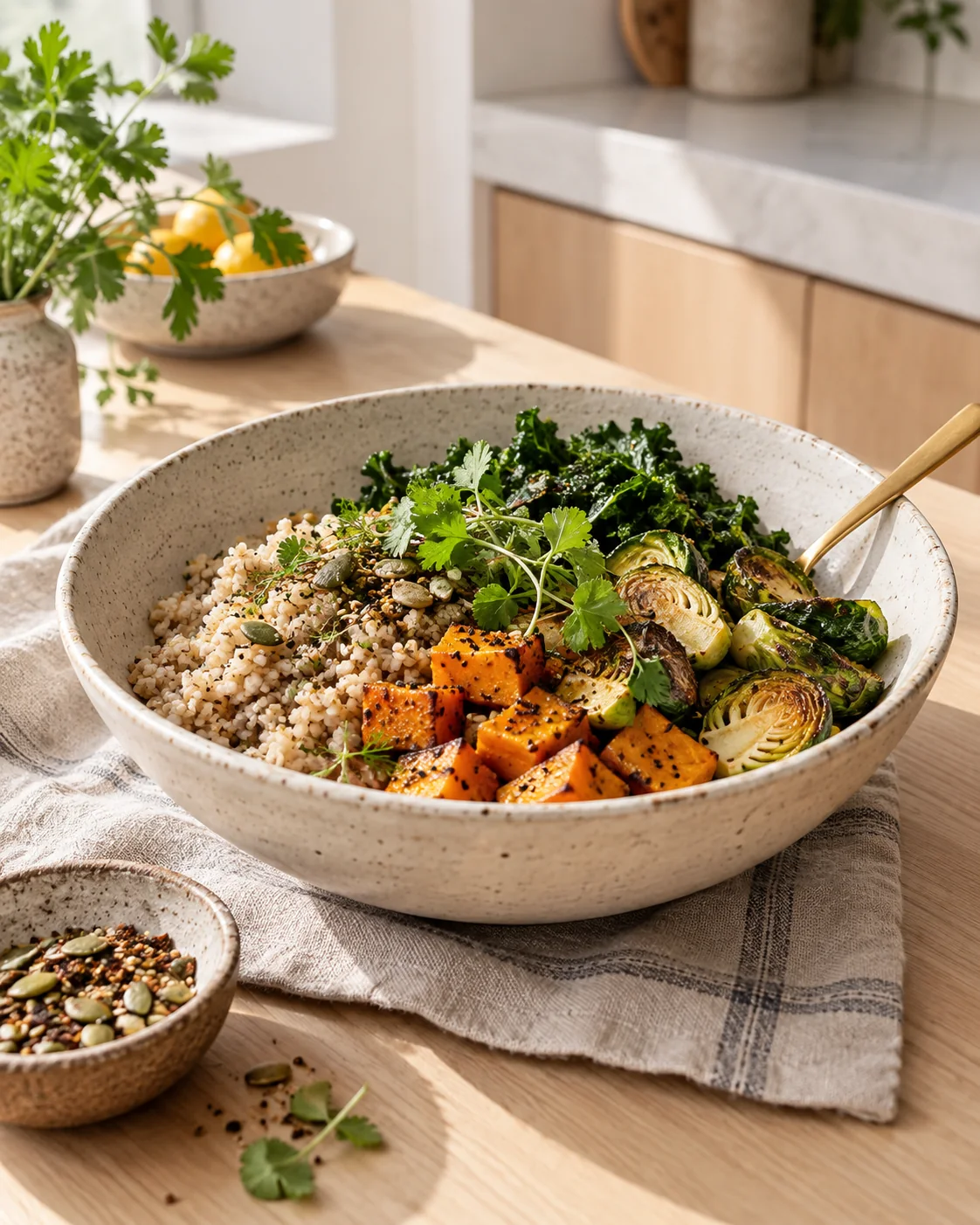
Illustrative artwork for education and context.
Ahara: nourishment in daily life
Ahara, or food, has a central place in Ayurveda. Classical guidance considers not only ingredients but freshness, preparation, amount, combinations, appetite, timing, season, and the person who is eating. Food is approached as an ongoing relationship with daily life. The goal is to find a way of eating that is satisfying and suitable for an individual, rather than to impose a single list of permitted foods.
The eight considerations for a meal
Ayurvedic dietary writing discusses the nature of a food, its preparation, combinations, quantity, place, time, manner of eating, and the person consuming it. These considerations help explain why the same ingredient may be experienced differently when cooked, served in another amount, eaten at a different time, or chosen for a different person. They show the depth of the tradition’s food reasoning beyond a simple dosha chart.
Constitution and current patterns
The doshas—vata, pitta, and kapha—provide a vocabulary for qualities and tendencies. A practitioner considers constitution alongside the present pattern: appetite, comfort after meals, sleep, activity, season, preferences, and the demands of daily life. The aim is to understand the eater as well as the food, then choose changes with that person in mind.
Agni and the experience of eating
Agni, or digestive fire, is Ayurveda’s model for transformation and digestion. A practitioner may ask when hunger appears, whether a meal feels satisfying, how comfort changes afterward, and whether that experience shifts with season or routine. Those observations guide a personal discussion of food, preparation, portion, and timing. Explore the agni guide for the fuller traditional explanation.
Six tastes and the qualities of food
The six rasas, or tastes, are sweet, sour, salty, pungent, bitter, and astringent. Ayurveda also considers guna (qualities such as light or heavy, dry or moist), virya (heating or cooling potency), and how preparation changes a food. The aim is not to collect every taste at every meal, but to understand variety, suitability, and the effect of preparation within a larger eating pattern.
Rhythm without rigid rules
Eating with attention and building a workable meal rhythm are common Ayurvedic themes. That might mean making time for a meal, noticing hunger and fullness, or planning around work and family schedules. The right timing and portions vary. People taking medicines, managing blood glucose, pregnant or nursing, or living with an eating disorder may need specific guidance before changing meal patterns or restricting foods.
Digestive discomfort
For digestive discomfort, Ayurvedic inquiry may begin with meal size, preparation, pace, timing, and foods that repeatedly affect the person. A plan might explore freshly prepared cooked food, a steadier eating rhythm, or a different balance of tastes and qualities. The person’s response matters more than a universal list. Persistent, worsening, or unexplained symptoms call for medical evaluation alongside any food discussion.
Applying the framework to blood sugar concerns
A traditional food conversation about blood sugar concerns may consider regularity of meals, appetite, the six tastes, movement, sleep, and the person’s ability to sustain a routine. The details must account for any existing glucose readings, medicines, and nutrition plan. Concentrated herbs or major dietary changes can affect glucose management, so people using medication should review such changes with their treating clinician.
Food, rhythm, and heart health
For someone thinking about heart health, Ayurveda offers questions about preparation, saltiness, heaviness, portion, rest, activity, and seasonal habits. These can make day-to-day choices more personal and culturally workable. A person with high blood pressure, kidney disease, or a prescribed diet should discuss substantial changes with their treating team.
Weight and sustainable habits
Ayurvedic dietary reasoning considers food qualities, appetite, activity, rest, and the pattern of a person’s day. A nonjudgmental conversation also includes access to ingredients, family meals, culture, and personal goals. Sustainable adjustments can be reviewed over time. Restrictive cleanses and rapid weight promises are poor substitutes for an individual assessment, especially when weight is a medical concern.
Herbs and supplements are a separate decision
Culinary spices can be part of an ordinary meal. Concentrated extracts, high-dose herbs, and supplements are different products with their own risks, quality questions, and possible interactions with medication. Bring a list of everything you take to a conversation, and check with a physician or pharmacist before adding a supplement when you have a medical condition or take prescriptions. An Ayurvedic food discussion does not require a product purchase.
Personal assessment comes first
Vaidya Kamal can begin with your current meals, cultural preferences, food access, schedule, and what you hope to change. Together you can select a realistic adjustment and observe whether it fits your life. Share diagnoses, food allergies, pregnancy-related needs, prescriptions, and supplements so the advice is specific and safe; condition-specific dietary care may also require a licensed clinician or registered dietitian.
Further reading
The CCRAS dietary and lifestyle guide explains ahara, meal considerations, and routine. The CCRAS food qualities guide discusses the six tastes. For condition-specific care, see NIDDK and the NHLBI DASH plan.
This guide explains classical Ayurvedic ideas for general education. Personal recommendations depend on an individual conversation, your health history, and the suitability of a particular approach.
Back to resources